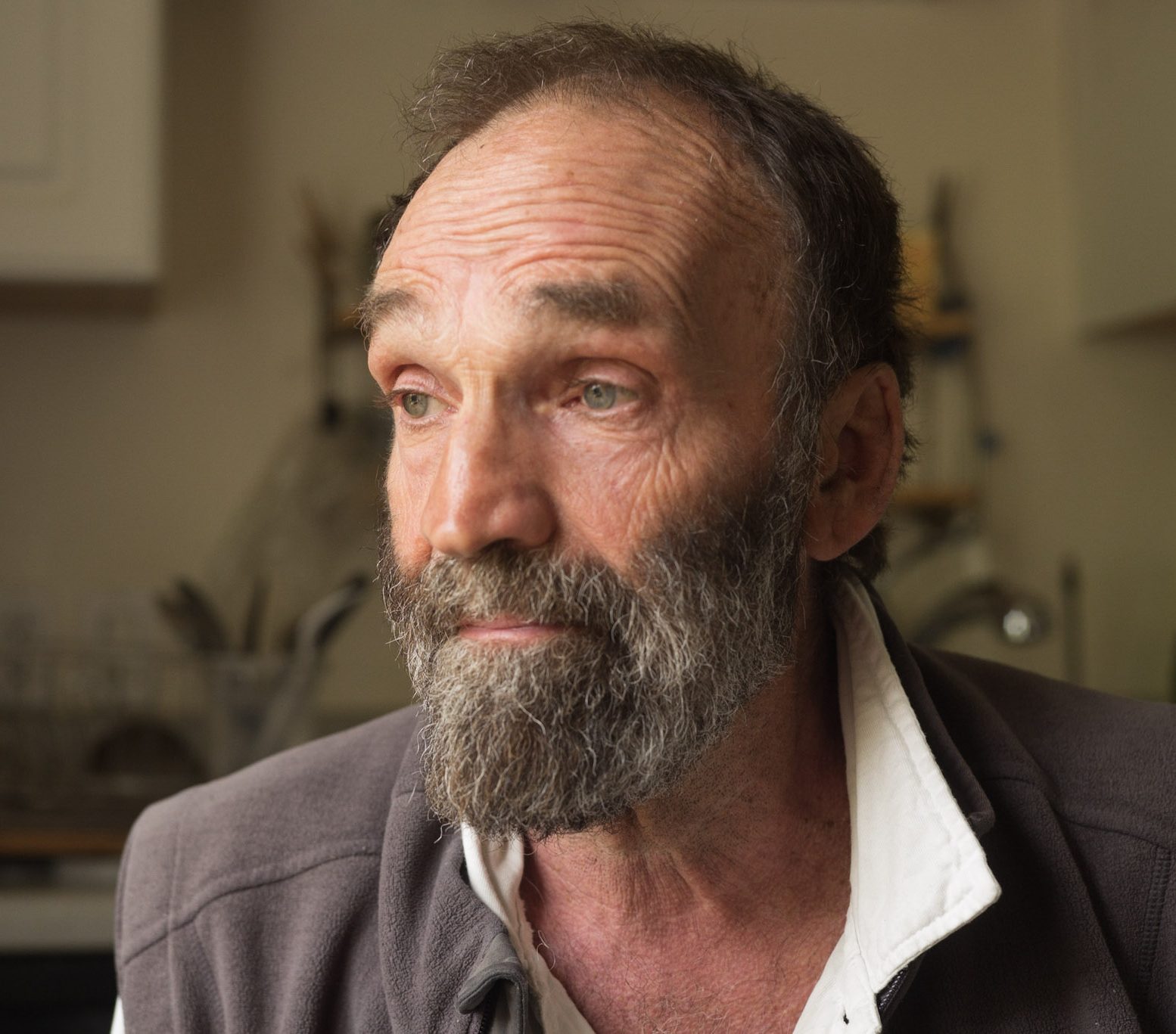
Excerpt from Hiding Out With The Enemy ~ A Zen Carpenter’s Tale

I grabbed my packed bag and headed north. An hour into the drive, anxiety fluttered my chest, followed by hot flashes running up my neck and back, forcing me to pull off the highway. I’d done enough practice to know that the lurking fears I tried to keep hidden eventually had to be faced; sitting on the meditation cushion was as good a place as any for that. The Roshi and other monks had helped me to see the futility of my strategies to sidestep fear, especially the Big One—the childhood claustrophobia driving me to avoid situations that closed in on me. Unless I allowed my concealed fear to arise, willing to sit with it until it lost its hold, I knew my world would shrink with each calculated evasion. I also knew that I could easily end up spending the ten days circling around minor-league fears, but that would be one more avoidance. There might be a few rough moments on the cushion, but that was true for anyone who wanted to follow a path with heart. All retreatants were expected to stick with the entire program. No matter what. I was ready.  To meditate, to still the mind, to engage the Inner Critic’s torment with courage and come out the other side. Once and for all, I would tame the dragons that were the creation of my own mind. Or so I tried to convince myself, my chest still fluttering.

I exited the freeway at the familiar rural exit, drove up a winding narrow road, and then navigated a precipitously scary dirt track ending at a locked farm gate. I fumbled a few times with the combination that had been included in the registration packet, sighed in defeat, then rifled through the glove box for a pair of reading glasses. The moment I closed the gate and entered the monastery property, the butterflies in my stomach did a 360 like you’d see in snowboard competitions. I turned off my iPhone and put it in the glove box in obedience to the directive to bring no books, no computer, or anything else that would tempt me to have contact with the outside world.

As The Beast rattled down the wooded dirt road, I grumbled about the crappy pickup. The built-in toolboxes and over-cab lumber rack made up for the stinky diesel’s tired suspension and dead AC, but today I was embarrassed by the noisy, smoking truck disturbing the forest silence. One day I’d upgrade, but the day never seemed to arrive. I parked The Beast by the office and let my mind drift. An image of Pamela smiling in the driveway, so pleased when she’d assumed that I’d unloaded The Beast, jabbed me like a hockey stick in the ribs. I was jolted out of my daydream by the sudden appearance of the Guest Master, an older woman standing silently in front of the truck, who greeted me with an empathy in her grey eyes that bespoke of a lifetime on the meditation cushion. She bowed with palms together in Gassho—a long-honored Zen custom, a mutual recognition that her heart and my heart were one. It was an acknowledgment that all devotees of Zen were keeping alive the teachings of Buddha—the Dharma— which could only thrive with their whole-hearted dedication.  It also was a reminder that all participants were here to pay attention to how their constant inner monologue was limiting the spacious—and quiet—expanse of Zen practice.

I grabbed my bag when she motioned to put it in the back of an ancient electric golf cart. Before climbing in herself, the Guest Master gestured making a phone call. I went to my truck, opened the glove box and surrendered my cell phone. She mimed turning on the ignition. I handed her my keys. Raising her eyebrows, she typed on an imaginary keyboard. I shook my head, bowed, and folded my stiff frame into the cart for the ride to my hermitage.

After opening the recycled door, the Guest Master bowed again, started to leave, then turned around and whispered, “We now have hot showers in an unheated shed. Three-minute time limit. It’s marked on a map in the dining hall. Please don’t be late for dinner.”

The kitchen had previously served up good vegetarian staples of grains and veggies, but when I entered the dining area, I noticed a new sign on the message board:                   We no longer offer coffee.

“What the fuck?” I protested louder than I’d meant to. A dozen heads turned, my voice violating the strict vow of total silence unless in a group discussion with Roshi. Not even close to resigning myself to cold turkey, I searched the kitchen shelves, despairing the absence of black tea to help with caffeine withdrawal. The personal delights of a stiff back, constipation, crippling knee pain, and shivering in an unheated, uninsulated hermitage during my last retreat came rushing back into memory. Then I heard a voice in my head:                          

Don’t Think. Expect Nothing. Let Go.

Twenty retreat participants stood in line, taking their turn to be served a simple meal. Lentils, onions, and celery in the soup bowl were accepted as the most generous blessing. I sat on a wooden bench, my food on a table in front of a blank white wall, and mindfully placed my spoon by the side of the bowl after each mouthful. When the kitchen bell rang to signal the start of the evening meditation in ten minutes, I washed bowl and spoon, and then joined the group heading to the chilly zendo. The meditation period ended with three strikes on a large Japanese gong and all the retreatants were sent to their cabins, each to write in their journal, at a tiny wooden shelf, with only a battery lamp to see by. My stiff fingers gripped a ballpoint, I wrote about the ways I unconsciously participated in keeping my ego in the driver’s seat:

I see the inner battle between my willingness to wake up and to end suffering, but at the same time my ego creates new and fresh ways to keep my current misery in place.

I scribbled another page, yawned, put down the pen, shaking my head at the impossible dilemma, and crawled into the Subzero sleeping bag.

I bowed before entering the frosty zendo meditation hall at seven a.m. I’d been trained many times in the basics of Zen meditation: Follow the breath. Sit as still as possible. Avoid scratching your nose or wiggling to get comfortable. Basically, forty minutes of struggle until the meditator slowly settled himself in quietude. Heavenly Buddha, please may the gong ring soon, I prayed.

Breakfast was served five minutes after the sitting meditation concluded, a hearty reward for the brave retreatants. I warmed my hands on a bowl of hot oatmeal and prunes, then a cup of mint tea, wishing every other second that it was a strong cup of coffee. My colon had been raised to expect a morning jolt to kick-start the daily movement. Three days later, I had a textbook case of hemorrhoids from straining in the outhouse to drop a stubborn pellet before getting my frozen bare ass covered as quickly as possible.

On the fourth night, it snowed, making the forest trails a fairyland—until I slipped and jarred a bad shoulder. Fucking hell! . . . Oh, I almost forgot: No complaints.

Twice a day, the visitors met for Dharma discourse—the teachings of the Buddha’s wisdom—practical instruction by the Roshi as he presented a precise guide to inquiry. It was also described as a hands-on, how-to coaching session on paying close attention to the slippery terrain of the mind.

I took dismal comfort in the fact that I wasn’t the only one suffering. The egocentric voice commonly known as the Inner Critic, skilled in an endless variety of inventive cunning, zeroing in on its favorite target—namely, one’s self-esteem—preyed on everyone. After a few days of earnest denial—this can’t really be happening to me—I sensed that no one in the zendo was spared a direct experience of how the unconscious negative commentary dominated his or her field of awareness. This usually took the form of self-talk that was anything but positive. I cringed at the running monologue in my own head: Man, who are you kidding? What’s the use? You can’t do this. Give it up and get real.

During the next week, the men and women of various ages and backgrounds were training to pay closer attention to their inner conversations. They practiced keeping a lookout for infinite variations on these subtle, abusive narratives, also called Self-Hate. During group discussion every person shivering on their Zen cushion discovered that they were an unwitting partner in their own undoing. After a week’s investigation, every man and woman in the hall had made a personal admission that there is something wrong with me.

“Roshi?” A tall, trim woman whose manner reminded me of a lawyer I used to know, shot up her hand.

“Yes?” Roshi, somewhere in his seventies, not rotund but surprisingly filled out on a low-carb vegetarian diet, was the quintessential grandfather, available to respond to any question with his penetrating insight. I had initially been surprised by the close-cropped white hair rather than the traditional shaved head of a monk, but had instantly warmed to his sky-blue eyes that couldn’t hide a bent for goodhearted mischief and a smile that inspired any person seeking clarification to find their courage and trust the process.

“I’ve been thinking about this something-is-wrong-with-me thing, and I can’t really buy it.” The questioner hesitated, then continued with a briskness that sounded more like bravado than a sincere inquiry. “I mean, I’m published, I travel as a business consultant, and I own a fabulous house near San Diego. What could possibly be wrong with that?”

“Why are you here sitting so long on a cushion in the cold if everything is okay in your world? Do you like the Puritan ideal of pain so much?” Roshi asked. His smile was an encouragement for her to look deeper. The woman wrinkled her forehead, searching the ceiling for answers. Roshi waited a full minute, and then added,

“Even if you have enjoyed success in a career or have stashed away wealth, it doesn’t deliver the fantasy of lasting happiness. At least in my experience.”

The woman closed her eyes, started to weep silently then bowed reverently, receding back into a disheartened silence. Roshi then nodded to a man close to my age.

“Roshi, I feel like I’m a good husband and a great father. I give everything for my family. But I’m not feeling the glow I think I should. No matter what I do, it never seems to be enough.”

The Roshi waited for the man’s words to have their various effects on all the listeners, then responded. “What I have found is that until the Inner Critic’s beatings stop, true spiritual work cannot happen. The Buddha taught that we are not to take anyone’s word as gospel. But don’t believe even me. You have to find out for yourself what is actually true.”

“What does that have to do with my disappointment?”

“Your mind perhaps still believes the fantasy that if you do all the right things, there will be a happily-ever-after glow. When we find that the fantasy, or maybe myth is a better word, doesn’t actually deliver on the promise, we think we did something wrong or that there is something wrong with us.”

The man’s bald head reddened. Slouching forward on his cushion, he said, “I hate to admit it, but maybe what you are saying is true.”

I wondered if anyone there might have caught on to my secret, still carefully kept hidden from the group. My guard had been up to keep it buried, but I finally conceded with a stark lucidity that I was no different from anyone else in that room: there’s something wrong with me, too. No wonder the Inner Critic had been on my case.

During the sitting period on the ninth and last afternoon, my churning mind slowed. A quietude opened, my field of attention expanded, a broad relief from the constant chatter. The silence made every arctic minute I’d sat on the cushion a fair exchange. My mind’s nonstop evaluating, judging, comparing, criticizing and interpreting everyone, everything—and especially my own mind’s fabrication of who I took myself to be—simply stopped. The conversation in my head was as quiet as the zendo hall. Only this spacious moment. Sitting was simply happening. Spending sixty hours squirming in meditation seemed a high price to pay for a little taste of nirvana. But the insight, opening me to a deep relaxation, lured me to promise myself to keep at it when back home.

The final bell gonged. The retreat was over. The others in the zendo hall plumped up their cushion for the next meditation session. They put their palms together, bowed to the wall and one another in Gassho, then single-filed out the zendo door in stocking feet. I didn’t leave. The sounds of soup bowls being dished up in the kitchen made my stomach growl, but the white wall in front of me had become a comfort, the hardness of the black cushion now a support. I continued to investigate the feelings I had avoided about what had gone wrong with Pamela and how to get her back. There was more to see, but after twenty minutes of inquiry, my bladder had other ideas. After lunch, I ambled over to the plywood cabin to pack my belongings, but instead of plowing into the task in my usual hurry to get the next thing done, I packed with uncharacteristic attention to placing each item in my bag. The birds filled the woods with full-throated hallelujahs as the sun broke through the gray sky. Spring was a long way off, but a preview buzzed the forest. I closed the door behind me in a new-found gentleness. A swell of gratitude lit my heart for the shelter that the hermitage had provided. I walked deliberately, slowly, up the slope toward my pickup. No rush to get back to life. What life? I groaned. No work, no woman, and no fun.

A voice of wisdom whispered with a kindness I rarely experienced in my inner world: Don’t Think. Let Go . . .

I climbed into the truck and cranked open the driver’s window to let the dank air escape the cab. A flash of understanding interrupted my normal everyday thinking: every breath presented a fresh moment of decision—I could live in either a bright place, a simple joy, or a negative one. It was up to me to choose. A belly-roll guffaw exploded, then settled into a series of chuckles as I started the engine. The cold diesel clanked and clattered like a bolt had come loose, flying around the engine—but that’s just the way an old Cummins sounds till it warms up. The truck rumbled up the winding driveway. As I crested the hill just past the gate, I took my hands off the wheel, and bowed in Gassho—the expression of thanksgiving, gratefulness and humility all rolled into one simple gesture.

An Excerpt from Please Don’t Tell My Guru

Chapter Seventeen

This new life was great. Except the guilty scab on my conscience. Oh my God I am heartily sorry for having run away. Have mercy on my soul. And Karen, who had returned to Maine when hurricane Anna pounded the South Carolina coast, changed the phones at home to an unlisted number to prevent me from talking to my son and daughter. Guilt sucks.

A storm had also hit the Fratelli home. When I couldn’t reach Karen, I called Martha who explained why my old phone number at the house was out of service. “But Doctor Fratelli, the tropical storm in the Carolinas isn’t why Mrs. Fratelli came home.”

“Oh?”

“Three days ago my son Jimmy was mowing the lawn at your place after dinner and the same man who’d come crashing into the office looking for you drove up in a Cadillac convertible. When Jimmy told the man he didn’t know where you went or anything, he lifted Jimmy off his feet by the shirt, asking him if he was sure. Jimmy was so scared he and Sally moved out. So I called Missus Fratelli and she got back home yesterday.”

“Jesus H. Christ.”

“Excuse me?”

“Sorry, Martha. I know how you are with the Lord’s name. Is Jimmy okay?”

“No harm done, but who is this man? Are you in trouble Doctor?”

“How are the kids?”

“I guess everything is okay, but Missus Fratelli didn’t give me the new phone number. All she said was something about lawyers.And that I’m supposed to send her an email if anything comes up at the office.” Martha ran on for another minute with clinic business.

“What’s the balance of our account as of last Friday?”

“I think we can keep the doors open, Doctor. I mean the patients who have kept their appointments are okay with Doctor Anderson, but there’s plenty of no-shows who only want you to treat them.”

“Martha, you’ve done a great job. I’m really sorry about Jimmy. I’ll make it up to him when I get back.”

“When’s that, Doctor Fratelli?”

“I can’t say. I have to figure out a way to take care of Arthur, the man who’s been mucking things up.”

The pay phone went dead. I stared at the coin slot, not breathing very well.

“Hey Swami.” Someone behind me called. “We’re waiting to use the phone.”

I walked towards the bus stop to catch a ride to the meal hall for lunch. Veronica spied me, and fish-tailed her car to a stop, tires squealing as she pumped the brakes. There was no place to hide. She waddled over, the smell of coffee and cigarettes a big improvement to her usual foul breath.

“Angelo, I’m glad to see you doin’ a good job on the Honey Platoon. But now, with the increasing security problems, we got to ask visitors to either take vows or leave the commune.”

“What?”

“Plain and simple, Angelo. You gotta wear the beads and show GuruJi that you’se one of us.”

“When?”

“Tomorrow there’ll be an initiation ceremony after morning meditation. There’ll be a bus to take you to GuruJi’s. Be there or hit the road. You got that?”

“Yeah,” I sighed.

I scrubbed off any lingering Honey Platoon smell under a hot shower with plenty of scentless shampoo someone had left in the communal bath house. I couldn’t use just any shampoo or soap as I prepared for my ceremony. I had been lectured by a Dutch woman who seemed to have been born humorless. I mean, get serious folks. Anyway, the woman dryly taught us the facts of life.

“GuruJi is sensitive to scents, so if you are in the same room with him, you must pass through a team of sniffers who will pull you out of the hall if they catch even the suggestion of any herbal oils or soap or shampoo. If you want to stay in the commune, keep your smell sterile.”

Scott came by and loaned me some better looking clothes to wear to my initiation. Everyday a dozen men and women at Le Ranch took vows as disciples. A hall had been built adjacent to GuruJi’s mansion for the initiations. He could spread the light from the comfort of home. By the time I showed up I had been searched, sniffed and threatened about violating the rigid line separating the master from the disciple. And drilled by a German who could’ve been a veteran of the Cold War not to ask questions, not to sneeze or cough or even breathe in the general vicinity of the living embodiment of truth on earth. By the time I knelt before GuruJi, I worried more about screwing up the infraction code than losing my precious ego.

But the mysterious power GuruJi wielded stilled my mind. The chatter had disappeared, the moment zinging with electricity. My breathing settled like a mountain yogi’s. I was composed but not controlled. This was like nothing I’d ever experienced before. I mean, even at sea with mountains of ocean tumbling across my foredeck, shredding my mainsail and burying my prayers in shrieking wind wasn’t more intense than sitting quietly before GuruJi as my walls crumbled. I’d spent a lifetime building them around my heart. And his eyes ripped right into me. The funny thing is that I wasn’t frightened. It was more like relief. You know, like when you yank a splinter from a pulsing infected finger. The pus oozes and the pressure eases.

This was all happening while the big guy spoke to me.

“This is your new name: Swami Prem Angelo. Prem means love. Angelo is the angel hiding behind the devil of your mind, your ego. Love will heal the wound, that scar which has separated the heart from your life. Prem Angelo, you will be a prince of love, no longer will you need to carry this burden of the conqueror. You can let go. Your struggle is over.” GuruJi hung the rosewood beads around my neck. “How long will you be staying with me, Swami?” I couldn’t answer. Being this close to him, his eyes burning through my skull, left me paralyzed.

“Nothing to say, eh?” he smiled. “Good, that is the first step. You must give up the questions. Then the mystery will slowly reveal itself. Stay here for as long as possible.”

I could only nod. It was a pathetic show. I had a dozen questions. Why were we here in the desert with a string of angry women running the place as if every decision was only to determine who they could piss off? Sure, a city was being built, but it was in spite of the matriarchs, not because of their clear thinking and management skills.

What kind of madness had taken control of my life? What was I thinking, kneeling before a guru? Why hadn’t I had the brains to drive off the property in my Porsche after I got fired from the Safety Patrol for saving a drowning Indian? I should’ve left Le Ranch and got busy with forthcoming apologies to my estranged wife. And go straight to Mr. Padula with a payment plan which would include keeping my bones intact so I could work off my gambling debt. How could I explain turning my back on my problems to genuflect before a guru? To take a spiritual name? My mind couldn’t find the logic to piece it together.

And at the same time, I didn’t want to figure it out. The moment was supremely satisfying in some way my mind could not explain. This was not an experience which I could file in the proper compartment of my brain. And I couldn’t even find the clerk to file the experience.

A timelessness flashed.

Then I was cresting the timeless. It’s not that I was gone in some altered state, staring blankly at GuruJi. No, I was clearly present at his feet. My heart opened, capable of comprehending the wordless message, the Divine. Was this a sacred transmission? Was I being initiated into the holy? Nothing I could say or think at the moment could come close to putting it into a perspective that was part of my previous life.

“Angelo,” GuruJi said. “Your mind is churning like a paddle wheel on a Mark Twain riverboat. You are welcome to speak. Speak, my new sannyasin. Talk to me.”

I looked to my immediate right. The German who’d briefed me on protocol narrowed his eyes threateningly. My rectum puckered and my nuts shriveled from the wordless threats he silently mouthed if I dared disobey his warning about speaking to the Master. But I took a deep, slow breath like Deva would’ve done. I started to feel my center. The German’s icy blue eyes didn’t seem to affect me. I found the courage which had given me the balls to take on the pounding North Atlantic in a few dozen gales and one mother of a hurricane. What, the guy’s gonna take me to a Nazi oven and fry me for disobedience?

“GuruJi,” I found myself speaking the unspeakable. “Do I have to obey your girls everyday?” I held my breath, waiting for an angry Zen whack.

“Which girls?” He raised his eyebrows.

“Them which provokes.”

“Ahhhh, now I see. You have met your resistance, Swami. Yes?” He smiled, looking at me with a cunning seen in madmen. “If you are willing to surrender to their authority, if you can allow the internal argument to drop away, you can slowly watch the ego mind fade. With this opening it is possible for something new, something fresh to grow. Be patient. Be aware. You will see.” GuruJi giggled as he patted my head.

But I had no idea on how to surrender. So far it had seemed like the ultimate abandon of reason. Say yes to Veronica and her crowd in the name of enlightenment?

I’d entered the belly of the whale and was about to be engulfed and ingested by the inner workings of a system about which—despite my around-the-world-travels—I was clueless. What had happened to my mind was nothing to prepare me for my next adventure in Guru Gulch. But no matter what else was coming down, I was not going to eat Veronica’s shit.

Since GuruJi had arrived in the USA, he had strictly adhered to a vow of silence, at least in terms of public speaking. Maybe his lawyers had advised him to take the Fifth Amendment not to incriminate himself politically. It didn’t do much good. Like Deva had said, Hell and damnation were the threats shouted by the locals. And their call to arms was backed up by their duly elected county and state representatives bent on keeping the growing cult from taking over county politics.

GuruJi was more an armchair philosopher than a Gandhi who’d walked the earth in a simple loin cloth, leading a country in revolt against British Colonial rule. Our GuruJi sat in his custom designed easy chair to support his painful low back and read a few books everyday. He chose to allow Le Ranch to be run by a squad of crazed women. The supreme dictator of Le Ranch and all its daily nuts and bolts doings, the right hand woman of the Guru through whom all orders from on high do come, was one notorious dragon lady. Sal, in her burgundy Stetson, had proclaimed to the land agent selling the property that the newcomers were here to provoke God. Why had GuruJi given his commune to a woman who seemed determined to start a range war with easygoing cattle ranchers from day one?

After my initiation, I was ushered to the exit. Fresh arrivals on my level didn’t come in contact with the inner circle but I caught a glimpse of the infamous Sal on my way out GuruJi’s mansion where I’d just been flying the astrals. I guess you could say that I’d made contact with the birthplace of the all. Maybe I was just hyper alert or still buzzing from contact high with the old man.

The expansion of my exalted state of mind was like snorting a hit of nitrous oxide you’d get from a dentist. I just couldn’t stop laughing at myself. What a stupido! I’d been worried about protecting my self esteem. And defending this ego story was the very source of my suffering. The joy of allowing the burden of a personal story to drop was like nothing I could have ever dreamed.

It was like sailing across Casco Bay without the weight of a wooden hull slowing me down. I was the wind, I didn’t need the boat. The July desert heat burned my forehead as I floated out of GuruJi’s, but my spirit was unaffected. What a high.

Now availabe on Amazon.com!

An Excerpt from Golf Between the Ears

Golf is a game of inches…..the toughest four are between the ears. —Arnold Palmer

The Rangers’ number one man teed up his ball and took a practice swing. The gallery, thankful for a bit of sun after the morning chill, quieted, almost holding its breath. Hundreds of Iowa golfers had been reading their local sports page about the guru kids’ daily meditation program and wondered if this undersized yogi could knock the puffed-up reigning champ off his throne. The odds were ugly. Erik Joven, the fifteen year-old, redhead, fly-weight, skinny vegetarian meditating invader to corn country was attempting the impossible. Taking down Mark Phipps, the burly State Champ.

Every hog farmer in Iowa backed their favorite son to kick Erik’s scrawny ass. They had no use for the newcomers wearing Birkenstock sandals and driving expensive foreign cars invading their uncomplicated world of grain production. Erik paused a moment, then another, and another.

Spring in Iowa was unpredictable and the fairways smelled lush after the frozen earth finally melted. The members of his parents’ spiritual community had founded an alternative high school in Fairhaven, Iowa and they rooted for Erik differently. With their sandals and cotton yoga pants wet from the morning dew on the fairways, they closed their eyes and calmed their thoughts. Their united, focused visualization of Erik’s victory would rally him.

Minutes passed as he calmly felt the pulse in his wrist. Mark Phipps, brawny, fierce and jacked on coffee, pulled a tin of chewing tobacco from the hip pocket of his blue jeans. He was itching to step up, slam a big hit down the narrow, tree-lined fairway, and bury this new kid on the scene. Erik stood facing the fairway with his eyes closed—waiting for his pulse to tell him it was time. He stood there with all the time in the world.

Erik’s coach from Lotus High, Ed Hipp, had a lot riding on the boy’s next tee shot. The damp fairways had partly dried by the sun, spotty behind the cumulus cotton ball clouds, and the following wind could only boost the kid’s chances. But the hostility from the beefy champ’s side of the gallery wasn’t helping Erik’s nerves. Ed had poured his everything into coaching this kid—all in the name of proving that he had the stuff to keep his wife from leaving him with their four kids. If Erik could pull this off, take home the title, well—that could save the wreck of Ed’s life.

The farmers backing Phipps had no use for most of the nutty techniques introduced to golf in the name of steadying a player’s nerves. But Erik wasn’t groping to save his bid. He was following a tradition established some five thousand years ago by yogis in the Himalayan Mountains. Everyone at Lotus High, a private school in a small town in Iowa, had studied Ayurvedic pulse diagnosis to help them discover when their body-mind relationship was out of balance.

Now, on a Friday afternoon in May, the ancient Vedic science of determining the subtle equilibrium and stability of a person’s energy found its way to competitive golf for the first time in Iowa City. The same course had hosted a PGA tournament years before, but today a new way of golf was being tested. Erik learned during his tough first season that placing a few fingers in the right place on his wrist closes the circuit connecting the mind to the physical. When it was time for Erik to pull off a mega-pressure tee shot or drop a winning putt, he—and most of the guys on the Rangers’ squad—was consistently able to calm his nerves even if they were clanging like fire alarms. Then, with all systems in sync, they could swing just as smooth as you please. That’s how Coach Ed Hipp explained it many times in his matter-of-fact way to these boys on the practice range. And here was one of his students, in a sudden-death playoff for the Iowa State title, examining his pulse.

Ed knew Erik was balancing his emotions, but this was Erik’s first test in major competition, and Ed felt like his own entire value as a man, a husband, a father, a coach and a meditation teacher would be declared in the next few minutes. His own pulse accelerated, his brow was wet with perspiration in the cool 48 degree afternoon sun. He looked desperate as a householder throwing his last paycheck on the roulette table in Vegas. Just this once, c’mon man.

Just this once.

Ed wasn’t the only one getting nervous. He saw the worried looks on Lotus high parents who had driven a hundred miles to cheer their sons in the State playoffs. The farmers in the gallery, wearing work boots, bib overalls and polyester visor caps promoting various farm seed companies, started whispering about Joven’s extremely long pause on the fifth tee—had the kid lost it, was he just stalling or what?

The crowd grew restless, the voices now louder. Hipp’s face turned embarrassingly red. Erik, just hit the freakin’ ball, will ya….

But the coach’s stellar player had now taken this practice to the extreme. Erik was a loner and had persistently distanced himself from the squad. He either was late or didn’t show for scheduled team practices. And if he did make it to practice he was silent, withdrawn, and occupied with his own private world. Erik, the Lone Ranger, now stood by himself on the tee exploring a transcendental moment. He stirred, the rural Iowa crowd’s loud whispers distracting him. The entire gallery heard a farmer ask, his raspy voice breaking the spell, “What the hell is that kid trying to do with his eyes closed and all?”

“Up yours, old man,” scoffed Erik as he gripped his driver with a menacing grin on his freckled face.

Ed’s shoulders sagged. All his hope snapped as he looked over at Erik. He wanted to strangle the kid. What the hell are you trying to do Erik? Start a range war?